
Every zone, every drop, on purpose.
Sprinkler systems, drip, smart controllers, repairs and winterization for homes, HOAs and businesses, designed from your real water pressure so every head gets what it needs and nothing is wasted.
- Free visit and written plan
- Pressure and flow tested
- 28 Middle TN cities
Run the morning cycle
Five zones, one smart controller. Press play, bring in the rain or switch to gaps coverage and see why design matters.
- Water used
- 0 gal
- Lawn moisture
- Zone now
- None
Pick a zone, or run the whole morning cycle.
- Designed from real numbersPressure and flow measured first.
- Head-to-head coverageNo dry stripes, no overspray.
- Written plans and pricesZone map and scope in writing.
- Backflow and code handledPermits, protection, testing.
48 services, eight families.
From a new system in Franklin to a leak repair in Bellevue or a drip bed in Brentwood, every kind of irrigation job has its own page of details, steps and answers.
Size it. Price it. Save with it.
Slide in your lawn, beds and trees, pick a controller and see a planned system with zones, heads, a planning price and a month-by-month water bill against a fixed timer. A free visit in the Nashville area turns it into a written proposal.
Size your system
Not sure of your rate? Divide a bill by the thousands of gallons used. Rates change by utility, and many also bill sewer on the same gallons.
- Planning price, installed
- Summer water, per week
- Fixed timer, per year
- Your plan, per year
- Yearly water saved
- Pipe, about
A planning estimate from commonly published averages, not a quote. Real prices depend on your pressure, soil, access and design. Savings depend on how your system is run today.
Saved. It will travel with your estimate request below.
From dry stripes to even green.
Drag the handle to compare the same Middle Tennessee lawn before and after a properly zoned system with a smart controller.
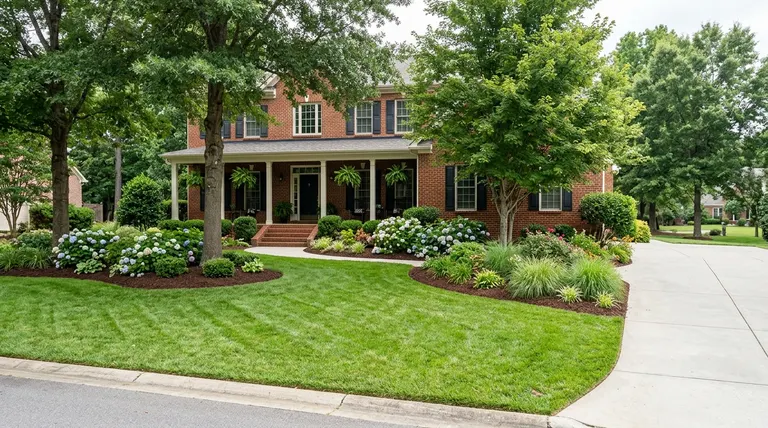
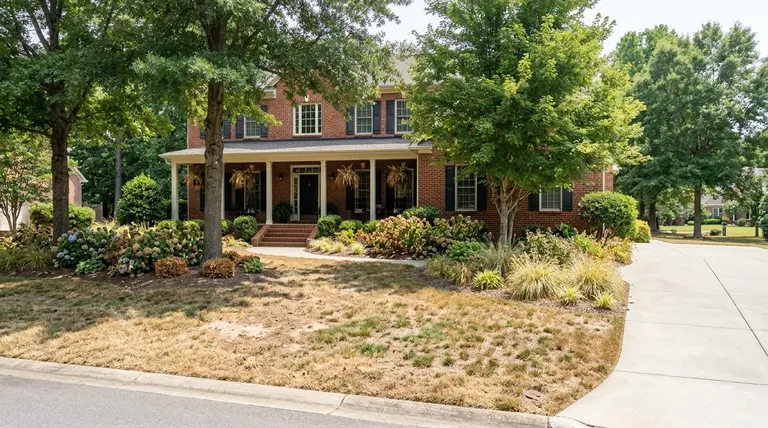
Eight parts, one job.
Tap each numbered part to see what it does, then run the water to watch it flow from the meter to the heads and drip lines.
Where your water enters. A dedicated or shared meter feeds the system, and the shutoff lets us isolate everything for repairs or winter.
Keeps irrigation water from ever flowing back into your drinking water. Required by code and tested on a schedule your utility sets.
The brain. A smart controller reads the weather and your zone settings, then tells each valve when to open and for how long.
One valve per zone, all together in a box. Each opens on a signal from the controller and sends water to its zone.
The pressurized pipe from the supply to the valves. It is always under pressure, so a break here wastes water fast.
Pipe from each valve out to its heads. It only has water while the zone runs, so leaks here show up as soggy spots.
Pop-up heads that rise when the zone runs. Matched nozzles put water down evenly so every part of the lawn gets the same depth.
Slow, low-pressure watering for beds, trees and gardens. A filter and a pressure regulator protect it.
What should the lawn get this month?
Pick the month, the grass, the soil and the heads, and get a weekly watering target and a run-time schedule for Middle Tennessee conditions.
What should I water, and when?
A starting point from common turf guidance for Middle Tennessee. Rain counts toward the total, and a rain sensor or smart controller adjusts for it.
- Days per week
- Cycles per day
- Minutes per cycle
- Best start time
- Before sunrise
Six steps, pipe to pressure.
Follow the water down the pipe from the first site visit to the final walkthrough. Every step is explained in advance.
Step 1 of 6
- 01
Site visit and tests
We walk the property, listen to what you want, measure the yard and test your water pressure and flow with a bucket and a gauge.
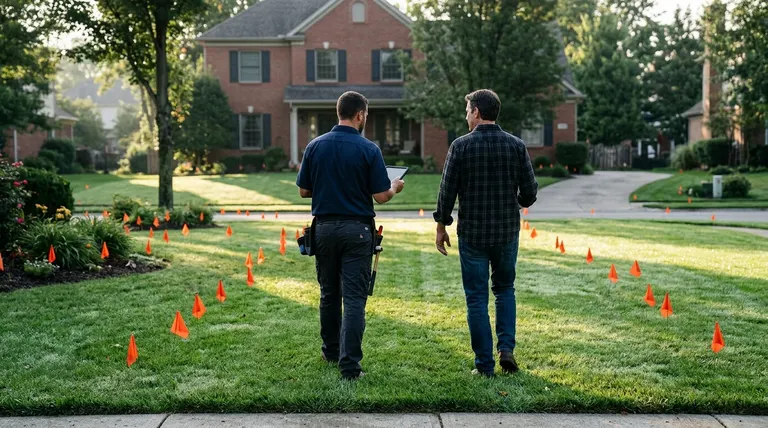
Numbers first - 02
Design and zone map
Zones grouped by sun, soil and plant type, heads placed head-to-head, and a written proposal. Flags go on the lawn so you can see it before we dig.
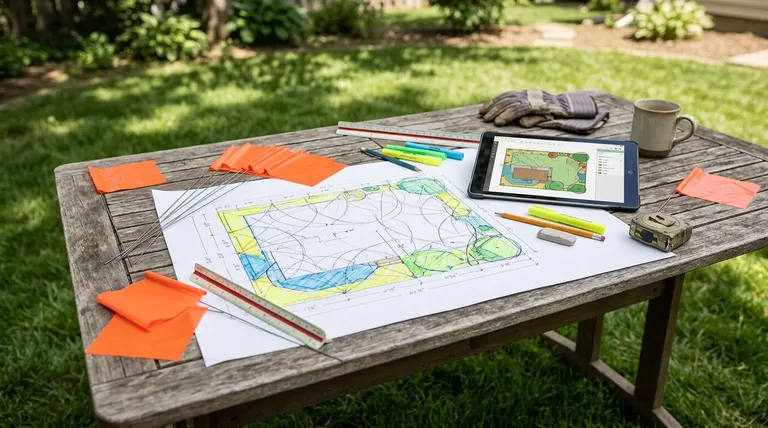
Drawn before it is dug - 03
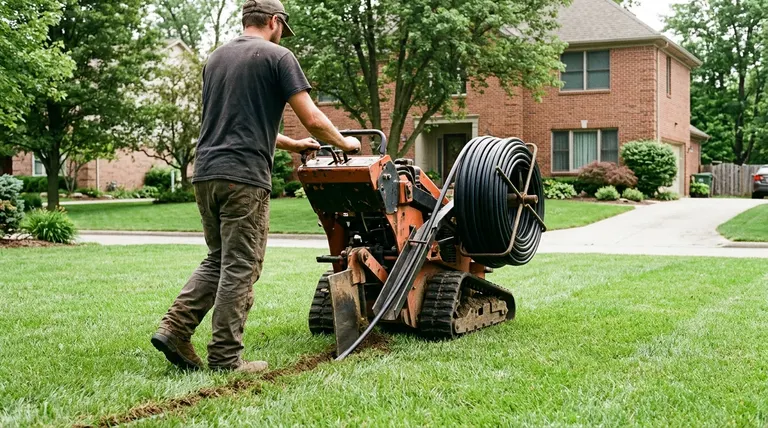
Trench and lay pipe
Pipe goes in with a pipe puller or a trencher, with utilities located first and the turf kept neat for restoration.
Low-impact pipe - 04
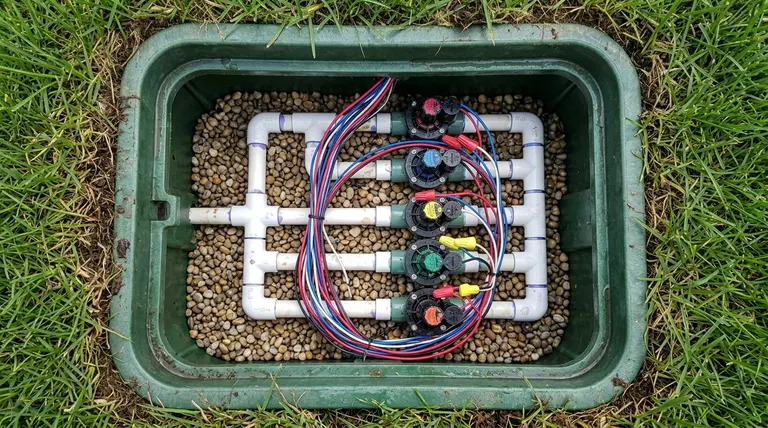
Valves and wiring
A tidy manifold of valves in a labeled box, waterproof wire connections and backflow protection that meets code.
Clean and labeled - 05
Heads and drip
Heads set flush to grade and nozzles matched per zone. Beds, trees and gardens go on filtered, regulated drip.

Set flush, tuned - 06
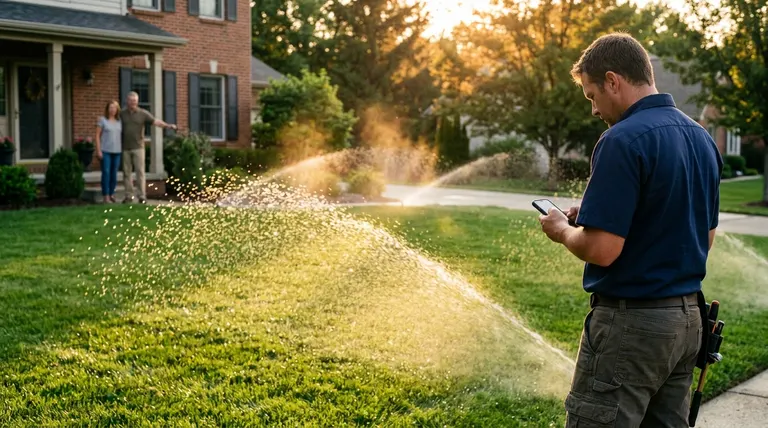
Test, tune and teach
Every zone is run and adjusted. The smart controller is programmed, the app is on your phone and you get a zone map for your records.
Handed over working
28 cities, one pipe network.
Every sprinkler head is a city we serve, connected to downtown Nashville by pipe and placed where it really sits on the map. Slide the distance, pick a county or open a city’s page.
Swipe the map sideways, or tap a city below.
A crew you can call.
Designed from real numbers
Pressure and flow measured first, so every zone is sized to what you actually have.
Matched, even coverage
Head-to-head layouts and matched nozzles so there are no dry stripes.
A zone map you keep
Every zone, valve and head labeled and handed to you in writing.
Backflow and code, handled
The right device, permits where required and testing on schedule.
Neat trenches, tidy turf
Pipe-pulling where possible and restoration that disappears quickly.
Plain-English reports
What we found, what we did and what to watch next.
Plain-English answers about water, zones and lawns.
Costs, schedules, heads, drip, controllers and seasonal care, written for Tennessee yards.
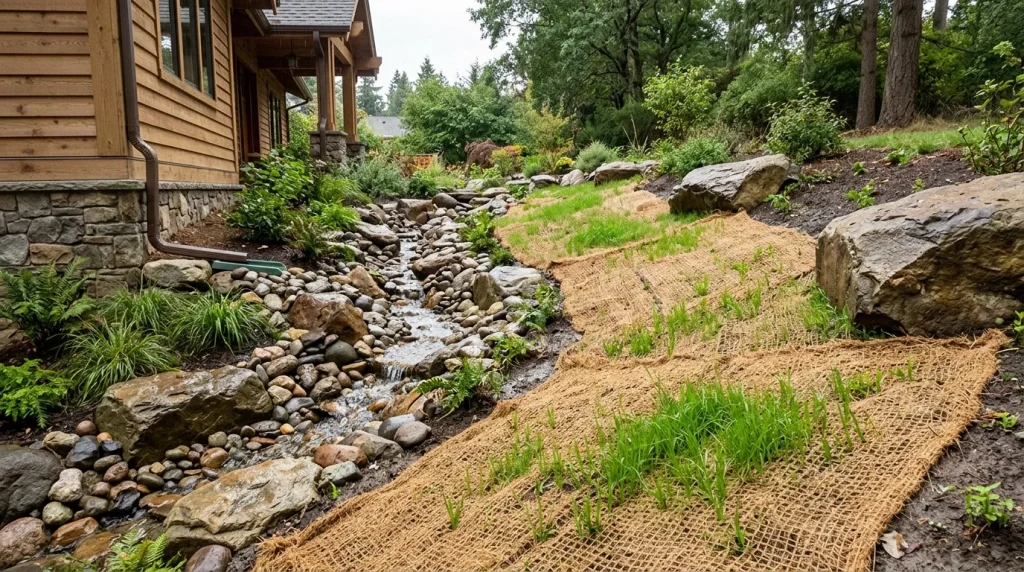 Design & InstallationClay Soil and Sprinklers: Why Your Lawn Runs OffHow Middle Tennessee clay changes how long and how often to water, and what to do about runoff.
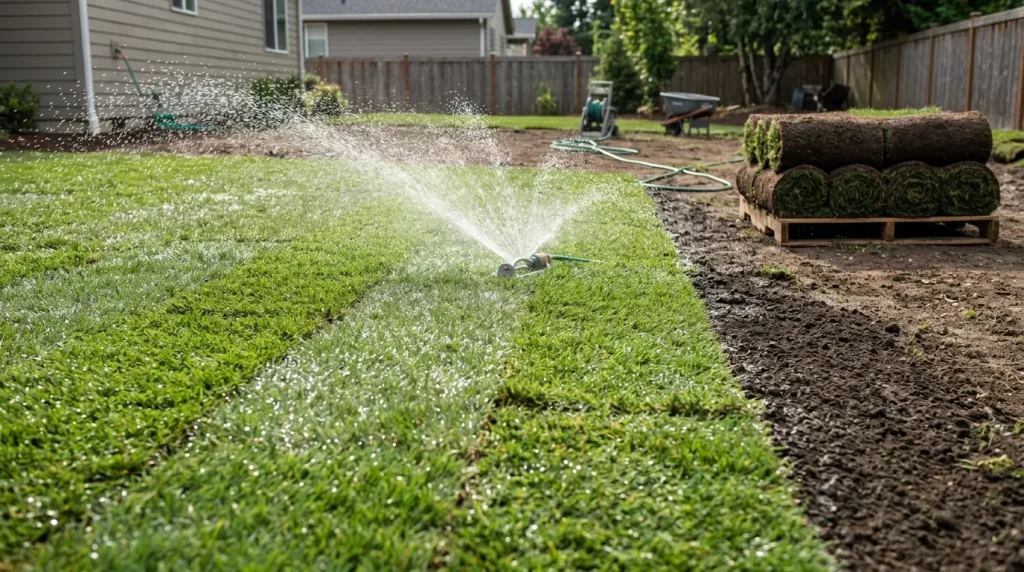 Seasonal CareWatering New Sod and Seed: A Week-by-Week GuideHow often and how long to water a new lawn, and how to step down as roots grow.
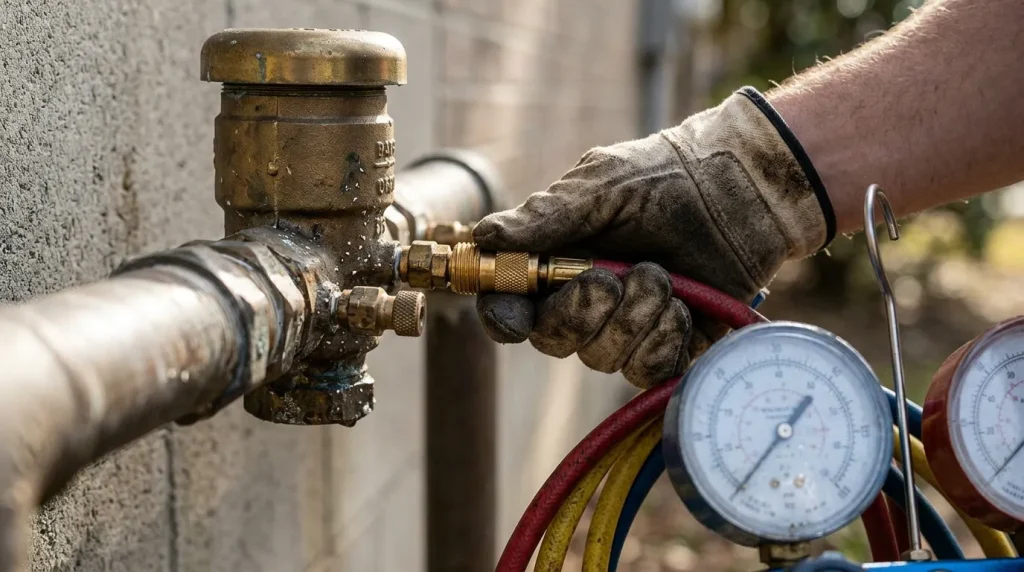 Seasonal CareBackflow Preventer Testing, ExplainedWhat a backflow preventer does, why many utilities require annual testing and what to expect from a test.
Questions, answered
How much does a sprinkler system cost in Nashville?
Commonly published planning ranges put a typical home system at roughly $2,500 to $6,500, with larger lots and complex designs costing more. The number of zones is the biggest driver, followed by lawn size, drip beds, the controller and any backflow or supply upgrades. Our Zone Planner gives a first estimate in a minute, and a free visit with pressure and flow tests gives you a written price.
How long does installation take?
Most homes take one to three working days once work starts. We schedule around utility locates and the weather, and we run and adjust every zone before we leave.
How many zones will my yard need?
Zones are limited by how much water your supply can deliver at once, so we measure flow and pressure first. A typical family lot ends up with four to eight zones, with lawn, beds and trees on separate zones because they need different amounts of water.
Are smart controllers worth it?
For most yards, yes. They adjust to weather and season and skip watering after rain. Commonly cited savings range from about 15 to 40 percent, depending on how your old schedule was set. They only work as well as their zone settings, so we program and tune each zone for you.
How much water does my lawn need?
A common guideline is about an inch a week in summer for cool-season lawns such as tall fescue, with rain counting toward the total, and much less in spring and fall. Our Water-Wise Planner gives a starting schedule for your grass, soil and sun.
When should I winterize and start up my sprinklers?
Blow out the system in late October to November, before a hard freeze, so water does not crack pipes and the backflow device. Start it up in spring, usually April in Middle Tennessee, after the risk of hard freezes has passed.
Do I need a backflow preventer, and does it need testing?
Yes, irrigation systems need backflow protection to keep drinking water safe, and many utilities require annual testing by a certified tester. We install the right device, test it and provide the report your utility may need.
Why is my spray weak or misting?
Usually low pressure at the head. Causes include a partly closed valve, a clogged filter, a leak, too many heads on one zone or low supply pressure. A pressure and flow test points to the right fix, and we explain the options honestly.